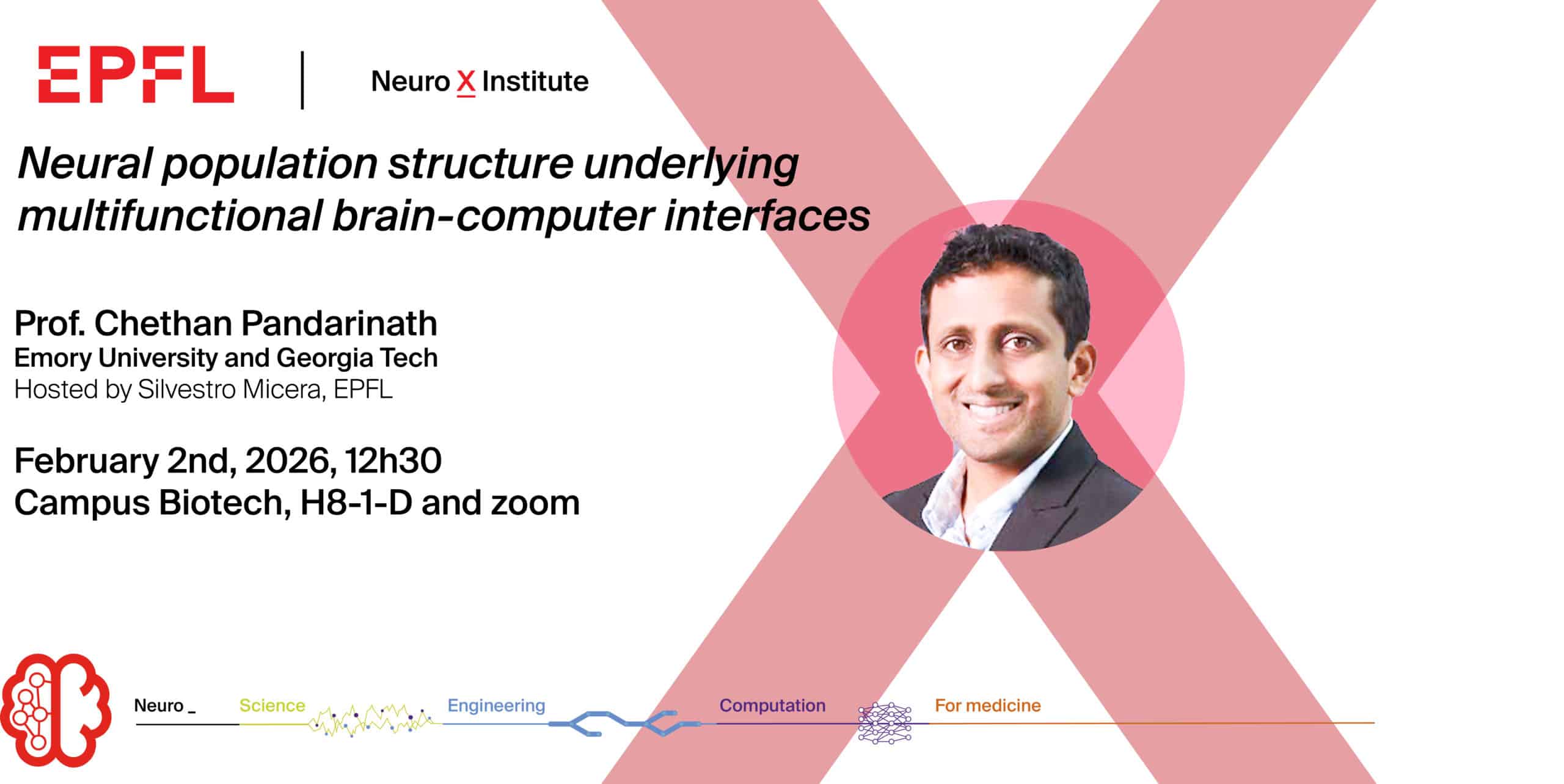
Neuro-X seminar: prof Pandarinath - Neural population structure underlying multifunctional brain-computer interfaces
Modern brain-computer interfaces (BCIs) must support diverse, complex behaviors. This talk addresses the challenge of creating multifunctional neuroprosthetics from two perspectives. First, we present a BCI with clinical trial participants that enables intuitive switching between distinct outputs, like speech and cursor control, by seamlessly decoding user intent. Second, using high-channel-count recordings in non-human primates (Neuralink N1), we investigate the neural basis for switching control modes. We reveal that motor cortex employs an abstract, effector-independent geometry for movement planning, distinct from an effector-specific execution layer. This compositional structure provides a powerful neuroscientific blueprint for designing the next generation of scalable and versatile BCIs.